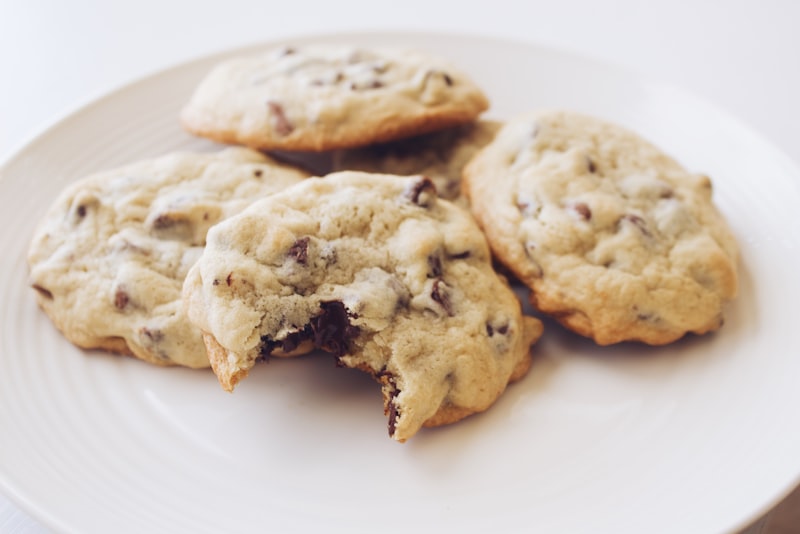
Ask ten people to describe the perfect chocolate chip cookie and you will get ten different cookies. Some want a molten, bendable center; some want a shattering, lacy edge; some want a soft, tender puff you could feed a toddler. The good news is that a chocolate chip cookie is one of the most forgiving lab benches in the whole baking world, and once you understand which lever does what, you can build the exact cookie you have been chasing.
Why One Dough Can Become Three Cookies#
Every chocolate chip cookie is a negotiation between four ingredients: fat, sugar, flour, and egg. Chewy, crisp, and cakey are not different recipes so much as different ratios of the same handful of things, baked through the same oven.
The reason this matters is that most people who are unhappy with their cookies keep changing recipes when they should be changing proportions. If your cookies spread into greasy puddles, a new recipe from a different blog will not fix the mechanism that made them spread. Understanding the mechanism does.
Here is the short version of what each ingredient contributes to texture:
- Butter melts, which is what makes a cookie spread. More available liquid fat means a thinner, crispier cookie.
- White sugar dissolves and promotes spread and crunch; it also caramelizes for a snappy edge.
- Brown sugar holds water thanks to its molasses, which keeps cookies moist and chewy.
- Flour is structure. More flour means less spread and a taller, softer, more cake-like crumb.
- Egg binds and, importantly, the white adds water and lift while the yolk adds fat and chew.
Hold those five facts in your head and the rest of this article is just arithmetic.
The Chewy Cookie#
Chewy is the texture most people mean when they say "bakery-style." You want a cookie that bends without snapping, with a dense, slightly underbaked middle and an edge that has just enough resistance to feel deliberate.
What to change#
- Lean on brown sugar. Shift your sugar so brown outweighs white, or go nearly all brown. The molasses is hygroscopic, meaning it grabs and holds moisture, and moisture is chew. Dark brown pushes this further than light.
- Swap in bread flour, fully or partly. Bread flour has more protein, and protein means more gluten development, and gluten is what gives that satisfying tug when you bite. I usually replace about a third to half of the all-purpose with bread flour when I want chew without turning the cookie tough.
- Add an extra yolk. Dropping one whole egg and adding a yolk in its place trades watery lift for rich fat, which reads as chew and tenderness at the same time.
- Melt your butter, then let it cool. Melted butter coats the flour differently and encourages a denser crumb. Just don't add chips while it is hot.
The trade-offs#
Chewy cookies are the least forgiving of the three at the oven door. Underbake them slightly and pull them when the centers still look a touch raw and glossy; carryover heat on the pan finishes the job. Bake them to "done" and the chew turns to a dry, sandy crumb by the next morning. If your chewy cookies go stale fast, you almost certainly overbaked them.
The Crisp Cookie#
A proper crisp cookie is thin, even-colored, and snaps cleanly. This is the cookie for people who love the edges of everything, and it is genuinely the easiest of the three to nail because you are simply encouraging the dough to do what butter and sugar naturally want to do: spread and set.
What to change#
- Tip the sugar toward white. Granulated sugar promotes spread and crunch, so a mostly-white sugar blend thins the cookie and crisps the surface.
- Use more butter, and consider a splash more. More fat equals more spread. Some crisp recipes even nudge the butter up relative to flour on purpose.
- Bake a little hotter and a little longer, and let them go fully golden to the center rather than just the edges. Color is flavor here, and it is also the sign the sugars have set into a snap.
- Bake straight from room temperature, not chilled. Chilling firms the butter and reduces spread, which is the opposite of what you want.
The trade-offs#
Crisp cookies live and die by even thickness, so give them room to spread on the pan; four to six per standard sheet is plenty. They also stale in the other direction from chewy ones, meaning they go soft as they pull humidity out of the air. Store them in a truly airtight tin, and never in the same container as a chewy or cakey cookie, because the moist ones will surrender water to the crisp ones and you will end up with two mediocre textures instead of one great one.
The Cakey Cookie#
Cakey cookies are soft, tender, domed, and a little bit fluffy. They are divisive, but they have a real constituency, especially anyone who grew up on the puffy grocery-store kind, and they are the friendliest cookie to bake for a crowd because they forgive a minute or two of extra oven time.
What to change#
- Add more flour. This is the single biggest lever toward cakey. More flour holds the structure up and stops the spread, giving you height instead of width. Start by adding a couple of tablespoons per batch and go from there.
- Keep the whole egg, or add another. Egg, especially the white, brings water and protein that set into a lifted, tender crumb. An extra white leans cakey; an extra yolk leans chewy, so choose deliberately.
- Cream softened butter and sugar properly rather than melting the butter. Creaming beats air into the dough, and those air pockets are what give the cookie its lift.
- A pinch more leavening helps, but go gently. A little extra baking soda or powder encourages rise, though too much brings a soapy, metallic taste and cookies that puff and then collapse.
The trade-offs#
The risk with cakey cookies is dryness and blandness. Because you are adding flour and egg without adding fat and sugar, the flavor can thin out. Compensate with a little more vanilla, a proper amount of salt, and don't skimp on the chocolate. These are also the cookies where good browning matters most for flavor, since a pale, soft cookie has done the least caramelizing.
A Practical Tuning Guide#
When a batch comes out wrong, resist the urge to throw out the recipe. Read the cookie instead, because the shape it took tells you exactly which lever to pull next time.
- Too flat and greasy? Too much butter or too much white sugar, or the dough was too warm. Add a spoonful of flour, chill the dough for an hour, and shift some sugar to brown.
- Too pale and puffy when you wanted flat? Too much flour or egg. Pull back the flour and make sure your leavening is fresh but not excessive.
- Dry and crumbly the next day? Overbaked, or too little brown sugar. Pull them a minute earlier and increase the brown-to-white ratio.
- Spreading unevenly across the pan? Butter too soft, oven running hot on one side, or dark pans absorbing too much heat. Chill the portioned dough and rotate the sheet halfway through.
The two variables people forget#
Two levers sit outside the ingredient list but change everything.
The first is chilling. Resting portioned dough in the fridge, even for just an hour but ideally overnight, firms the butter so the cookie spreads less, and it also lets the flour hydrate and the flavors deepen into something maltier and more complex. If you want a thicker cookie of any style, chill first.
The second is your pan and oven. A dark metal sheet browns bottoms faster and encourages spread; a light or insulated sheet keeps cookies taller and paler. Parchment gives a gentle, even bake, while baking directly on greased metal spreads cookies more. And ovens lie about their temperature constantly, so if your cookies never match anyone's photos, buy a cheap oven thermometer before you blame yourself.
Building Your House Cookie#
Once you can hit all three textures on purpose, the fun part begins, which is blending them. My own everyday cookie is roughly two-thirds brown sugar for chew, a third of the flour swapped to bread flour for structure, an extra yolk for richness, and an overnight chill for depth, pulled from the oven while the centers still look slightly underdone. That gives me a chewy middle with crisp edges, which is the compromise most people mean when they say "perfect."
Yours might land somewhere else entirely, and that is the whole point. Start from a recipe you trust, change one variable at a time, and write down what you did. Within three or four batches you will have a cookie that tastes like it could only have come from your kitchen, because it did.